How round-robin chore rotation works.
Choose the people who share a chore and select round-robin assignment. The recurring chore cycles through the assignees in order. For a weekly bathroom clean shared by Alex and Sam, Alex takes one turn, Sam takes the next, and the cycle continues.
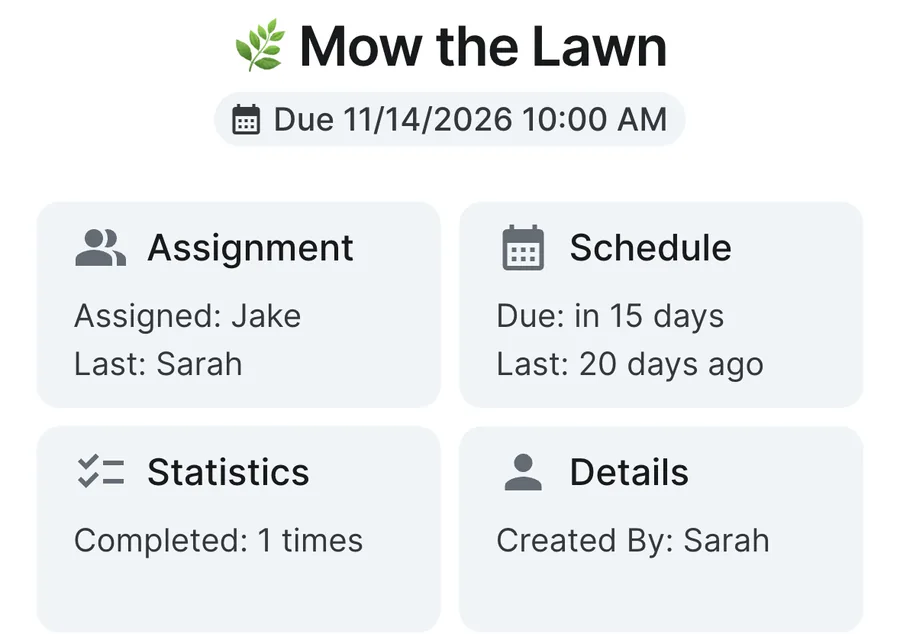
Choose when the chore comes back.
Donetick supports recurrence based on the previous due date or the actual completion date. These solve different problems:
- From the due date: keep a consistent calendar rhythm, such as a bathroom clean every Saturday.
- From completion: let the next occurrence depend on when the job was actually done, such as a task due a set interval after its last completion.
Choose an assignment strategy.
Alongside round-robin rotation, Donetick supports random assignment and strategies based on assigned task counts or completed chore counts. The right strategy depends on the agreement in your household.
A small routine is easier to try together.
Start by rotating one shared job. Check that both people can see it, understand the schedule, and know how to complete it. Add the rest of the routine once that works.
See examples for couples and for roommates.
A few more answers.
Does every chore have to rotate?
No. Configure the assignees and strategy for each chore. You can keep some chores assigned to the same person and rotate others.
Is rotation the same as recurring scheduling?
No. Recurrence determines when a chore comes back. Assignment determines who is responsible for it. You can use them together.

